Partly for reasons of aesthetics, partly for curiosity, mostly from a desire to start fresh, I've started a new blog at www.semiphilosophy.wordpress.com.
Take a look!
Monday, April 01, 2013

Saturday, August 27, 2011
Knowledge & Wisdom
The great blurred distinction between knowledge and wisdom has been a contemplation for roughly the last ten years of my life. In philosophical circles, where the morphology (philo sophie, "love of wisdom") implies a wisdom that should be present with its adherents, you find little sagacity and a lot of reactivity. That is, the philosopher is more often than not a brilliant collection of complex and stimulating concepts able at any moment to respond in Pavlovian style, but he lacks the mystique of someone who has touched with life and learned its lessons firsthand. That is, he often lacks the wisdom his very name implies.
Knowledge (and I'm speaking of a general idea-mediated understanding, approaching but not exclusively defined by truth, justification, and belief) is by its very definition tied up with language. The knower may actually meet the flesh and bones beyond his abstractions in the real world, but every bit that he may be said to rightly know must be capable of transmission through language, or else it's simply not worth his time, not worth knowing. There's a clear tendency to arrogance with knowledge, and perhaps this is what Paul had in mind when he said that knowledge "puffs up, but love edifies." For in a very real and terrible sense, the world of concepts and ideas that makes knowledge possible is a parallel world to the experiential phenomena that constitute the real world. And any world that's possible is one in which you can imprison yourself with the unfalsifiable claim that you have the better hand, all the worse given the potential infinity of ideas that any well-intended self can get webbed up in. Precisely because knowledge works through concepts, any attempt to explain a different way of relating to the world besides knowledge negates itself, given that in explaining, you're using ideas, concepts -- which can be known.
But there is another world, and "world" must be understood metaphorically, like a transcendent symbol that doesn't define something but simply points out from the world of knowledge into the unknown of human experience. For reality (or "reality") is by definition unknown. It's the foundation on which we ultimately hang our concepts (although not all, for some knowledge is properly a priori). It's the grand nothingness, grasped best by its negation in contrast to our concept-soaked minds, like a black hole in the midst of space flecked with shrapnel-like pieces of matter floating past. The wise admit this negation, and the sages rejoice in it. After all, it's so much easier to define the world we would like into existence, and this is precisely what so many of our billions-membered terrestrial souls do day after day. We secretly know we can't change the deepest reality, objective reality, but we can scramble the web of our concepts in such an interconnected and harmonic way as to give ourselves the impression that we have the truth, because, after all, it's too pretty and harmonic not to be called truth. And we guard and growl over our precious systems of thought, and like magnets each reality-denying self attaches itself to others under the guise of culture.
For knowledge the pinnacle is the scholar, whose world is painted with his own projections. After all, our non-innate ideas are built up based on our experiences with reality and the filters our cultures hand us, and it's in this packaging up through ideas that we lose the fullness and pregnant beauty of each thing as it is in the real world. I can know the meaning of a leaf through my collective experiences of the phenomenon of leaves, but how many leaves have been murdered by my reduction of each individual to a signified of leafness. For wisdom the pinnacle is the sage, who prefers his eyes beyond the grey flesh inches behind them that limits his world to a collection of ideas, and ascertains with a cool resignation when to leave his battered words at the mental door for the sake of the grander, indefinable Being, and smiles perpetually in the process. After all, the world is much better than our ideas about it, and life is more than thinking about life.
The wise yell from the mountaintop that the mountaintop can only be fractionally known. The knower arrogant with his own knowledge snuffs himself away from the living, breathing world because he thinks in Hegelian fashion that his mind which paints the world with his ideas is the breaking point of the worth knowing, when in reality he cancels out the lushness of existence by the very ideas he puffs himself up with. The knowers content with knowledge are the cosmic adults of the universe, caught up self-assertive claims to certainty, closed up and cut off from the way toward experience. Wisdom is the way of the child, free from the anthropocentric constraints of a concept-riddled world.
Wednesday, July 06, 2011
Tuesday, May 10, 2011
Monday, May 02, 2011
OBL: 1957-2011
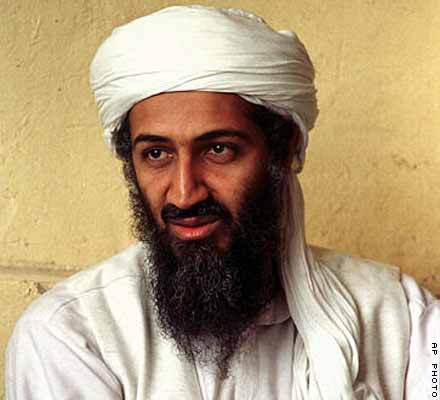
"And then there's the notion that America has once again proved its greatness and preeminence by killing bin Laden. Americans are marching in the street celebrating with a sense of national pride. When is the last time that happened? It seems telling that hunting someone down and killing them is one of the few things that still produce these feelings of nationalistic unity....In sum, a murderous religious extremist was killed. The U.S. has erupted in a collective orgy of national pride and renewed faith in the efficacy and righteousness of military force. Other than that, the repercussions are likely to be far greater in terms of domestic politics -- it's going to be a huge boost to Obama's re-election prospects and will be exploited for that end -- than anything else." -- Glenn Greenwald

Monday, April 11, 2011
Attention

We are made for movement, but first our eyes must be properly focused. The matter of good living is first a matter of right attention. Attention is coded in different ways: phenomenological experience, ideas, filtered through beliefs, values, goals. Now we're into the territory of cognitive therapy, which reformulates the thousands-year-old wisdom of Epictetus, a Greek slave with a crystalline mind: "people are disturbed not by things, but by the views they take of them." The vast majority of our waking lives we walk around talking to ourselves. Not externally, but internally -- psychotherapy jargon clips these words as automatic thoughts. The twist is that we often treat these self-stated words as if they're reality, and the vast majority of the constellation of souls haven't once disputed them with the rare exception of a friend who "changed my mind." A person remembers a difficult assignment and secretly says to himself, "impossible!" and so his feelings are anxiety, hopelessness, frustration. A twin in a parallel universe views the same situation and automatically thinks to himself, "unfortunate! But I'll manage," and feels a tinge of regret for having to sacrifice a planned free time activity. The responses that code our perception determine our emotional and psychological health. That's the tagline of the most empirically supported and widely used form of psychotherapy in history.
What was I thinking just hours previous, warm in bed, eyes stinging with poor sleep as the alarm rattled off? I was awfulizing necessity, dreary and damning the universe for existing as it does on Monday mornings. Work and rising from bed at an early hour had to come, but instead of an adaptation response of acceptance, I rebelled against gravity. Again, good living is a matter first of right attention, and in times when the outer world is immovable we always have the freedom to determine which attitude we will hold. Viktor Frankl called this freedom our "attitudinal value", and he learned it in the worst setting in world history: Auschwitz, naked and cold with the condemned bodies excoriated by a nation caught on a dream of superiority. He knew the secret: you always have the power to change your mind in any situation.
A person is as he does, and attention is a verb. We like to divide action from thought because we think that only the external, the measurable, the perceptible, is real. But the very core of human freedom begins with the direction of our consciousness; consciousness itself is willing-towards plus the senses. As we attend, so we live. There is no small accident in the New Testament's call to be transformed by the renewing of your mind (Romans 12:2). It's the mind that encodes and filters our experiences. The very words you secretly say to yourself determine the emotional output of whatever scene you find yourself in, from rage at an offhand comment to saintlike acceptance in the face of a crowd of contemptuous smiles.
What are you saying right now?
Monday, January 31, 2011
I've Rarely Agreed More
[Y]ou write in order to be read, it is the copulation of the act of writing. It’s the point of entry of your writerly subjectivity into the subjectivity of another, the infiltration by words. Words are the stuff of thought, invisible, intimate. I’ve always loved the idea that you could string a bunch of them together and make something that through imagery, word-sound, rhythm, and idea-content can invade another person’s mind, capture them.
Yes, you get the attention of the reader. But it’s more than that. In real, true, immersed reading, the words from the page are, in effect, replacing the words inside the reader’s head. And since words are the stuff of thought, almost the stuff of consciousness . . . Well, you can see that writing has a very powerful imperialist component. Conquest. On another front, reading is what gives you the essential material as a writer — not the experience of life, but choice.
And these are learned slowly, gradually, by osmosis, and there is very little significant writing that doesn’t depend on a deeply-schooled literary imagination. I am often shocked, I teach a lot of writers, would-be writers and they don’t read. They are not obsessed with the words of others. I don’t get it. If you’re not completely driven, get the hell away. To be completely driven is to be a reader, a deep reader.
-- Sven Birkerts, Pif Magazine interview
Wednesday, January 26, 2011
Another Reason Vladimir Rocks

Vladimir Nabokov may be known to most people as the author of classic novels like "Lolita" and "Pale Fire." But even as he was writing these books, Nabokov had a parallel existence as a self-taught expert on butterflies.
He was the curator of lepidoptera at the Museum of Comparative Zoology at Harvard University, and collected the insects across the United States. He published detailed descriptions of hundreds of species. And in a speculative moment in 1945, he came up with a sweeping hypothesis for the evolution of the butterflies he studied, a group known as the Polyommatus blues. He envisioned them coming to the New World from Asia over millions of years in a series of waves.
Few professional lepidopterists took these ideas seriously during Nabokov's lifetime. But in the years since his death in 1977, his scientific reputation has grown. And over the past 10 years, a team of scientists has been applying gene-sequencing technology to his hypothesis about how Polyommatus blues evolved. On Tuesday in the Proceedings of the Royal Society of London, they reported that Nabokov was absolutely right.
Monday, January 24, 2011
Proof: Editorial Incompetence

The following is an introduction to a clever (and depressing) experiment by an individual who really wanted to see how bad the tastes of editors have become:
In April [2001?] I submitted Vladimir Nabokov’s short story “Torpid Smoke” to seven online manuscript evaluation services. Other than changing the title to “Russian Smoke” and Nabokov’s name to Jonathan Shade, I left the piece unaltered. My online editors had some praise for the story, but also some suggestions on how to improve it. They each charged between three and fifteen dollars for their services.
The point should be underscored: we're speaking about a scintillatingly lyrical short story by Vladimir Nabokov, arguably the greatest stylist in the 20th century, and in my unabashed opinion one of the greatest of the stylistic bunch -- to be added to the list of Shakespeare, Proust, Joyce, and not much else --, being submitted to online editors with the floor left completely open for critiques. As any good fortune-telling cueball can tell you: the outlook does not look good. If Nabokov can be trashed by even one, much less seven, different services, that tells you how little the demand is for really verbally creative writing there is.
Times really haven't changed in terms of the odds of catching a pearl within the muck of the publishing world in terms of literary creation. But there is one difference, alluded to above, which makes the editorializing process considerably different, and thereby decreases the odds of finding the pearl of genius just mentioned: editors and those in the literary judgment realms are beginning to lose their aesthetic autonomy, and are choosing instead to try and reflect (or worse, naturally reflect) the tastes of the genred population they have in mind when thinking of sales. The profit motive has again corrupted something of importance in our society. Now it's all about what they think the average book buyer -- that vague abstraction which allows no particularities -- is going to dig.
Which is why I'd rather be spending my reading time in the company the dead.
Friday, January 21, 2011
On Work Anxiety
 For the few weeks preceding this one I found myself wandering around with the hazed feel of a half-aware dream. This was the time when I was still planting my feet into my first white-collar job, an internship (yes, slavery, but still loved), and the second leap into the grind of a forty hour workweek, my first being a two month stretch working construction, with all the exhaustion, sweat, and sexaholic men who archetypically come with manual labor deal. I’ve noticed a difference between these types of work which goes beyond the work itself – the very social environments are qualitatively different, the very people who make up the fields capable of being reduced to distinctively alternate modes of being.
 Take construction. The grown-up boys who made up most of the workforce were essentially men of flesh. They lived with immediacy in mind, and all the wishes for beer, sex, and compliant women were pushed to the very jokes and relative good humor they brought to the job. The recurring complaints were with the routine work itself. These were men who were seduced by the high pay and had become to a large degree trapped in this field because almost any other alternative job for their level of education and experience would have meant minimum wage or something approximate. The most tragic expression of this tendency was made in the words of a coworker on my brother’s crew. After a somewhat hopeful high school graduation based in dreams of getting good cash at construction, the few years of repetitive work exposed to the elements had begun to accrue, until eventually he would come to work entrenched in a morose mood, which would find a cryptic release through telling my brother that he would like to rob a bank because the job he was on now – which stood for the limit of work possibilities in his life – was inconceivable as a lifelong career and something he already hated with a cold, hopeless indifference. That was the cognitive refrain embedded in most of the minds there, which never found the roaring release of despair articulated by this young mind, whether for reasons of family support, religion, or the numbness that comes with accepting one’s burden over the years.
But these guys could be damn fun to be around. Dostoevsky, in his too little known Memoirs from the House of the Dead (not zombies, folks), recorded in psychological detail some unforgettable sights and scenes from his four year prison stay in Siberia (which he would later describe to his brother as similar to “being shut up in a coffin”), including the searing insight that the inmates there were by and large indistinguishable from children in their very personalities – in the way they sometimes quarreled over things, in their sense of appreciation when given attention, “like children, delighted over the smallest success, vain over it indeed.” Likewise with the field of construction. The jokes were juvenile, and many of the oldest members discussed with a sort of adolescent excitement the grand days of sexual adventure and partying till dawn. Humor and gentle jabs were ubiquitous. They lived for beer and all the clichéd masculine qualities you can imagine. And most importantly, aside from the perennial stress of drumming out the same work day after day and the expected (and therefore less harmful) layoff, they were psychologically free. Camaraderie is the adjective of choice.
The white-collar world, despite all its claims to the contrary, might not be that much better than its sweat-drenched counterpart. Despite the glories of a desk and office to oneself and salvation from the naked sun, here the workplace can become packed with a silent anxiety that isn’t quite articulated in the moment of social exchanges. Smiles are more often forced, emotions are more often manufactured. Kind words and good intentions may be present in the social greetings, but there’s a barely perceivable reservation behind most (if not all) exchanges, a slight distance in the exchange, just enough to be contagious, and have your mind clapped back in perpetual doubt even if you’re not sensitive enough to capture the hint with conscious eyes. The weekends may not be as craved as a life with those who live a life of manual labor, but I found that an inconspicuous retreat to my office often is. Perhaps part of the reason has to do with being more intimately juxtaposed with one’s higher-ups, and so having a higher consciousness of one’s performance, but there is a large degree of the same thing present in the blue-collar work environments.
But perhaps the answer seems more in the direction of being caught up more in our culture’s definition of comprehensive “maturity”. A large part of this means being conscious of one’s status and prestige, the importance of keeping oneself in a linearly growing career path, and from a broader perspective thriving in this environment often means having a higher sense of individualism. Yeah, the Reaganesque, up-by-our-own bootstraps individualism that means eschewing dependence and charging toward the goals that would better us and the families we might have. According to this view, others aren’t relatable because they’re too caught up in self and the web of self-related goals, primarily family, and we find a greater challenge working with a seamless exchange of words in relational moments because we’re led to believe that others are instrumental or ornamental parts to our driving goal of pursuing the American dream, or we’re consciously or unconsciously afraid of being the brunt of the neglect that results from this mentality and so draw back to a safety zone of stretched smiles.
It’s just a thought, and there are certainly other variables at play – such as our greater tendency for materialism (which correlates with the status drive), or the simple distractions that come with living a life of higher responsibility (family, deadlines, bosses, you got it). But there’s clearly something about the blue-collar mentality of being in a constant state of job anxiety regarding where you’ll work, which when added to the clear sense that your place in the hierarchy is down in the dregs rather than floating in the limbo of middle importance gives one a sense of ease in reaching out to others. When all is secure in the sphere of one’s career and the only way to look is up, then people who are capable of being given secondary glances are more likely to be handed them.
Then there’s the psychologically tricky part. Our light disdain for the existence of others – of not caring intrinsically for them as persons rather than parts of one’s work environment – translates to a fear of judgment by those who do the disdaining, and this fear of judgment adds that much more inertia to our reluctance to take the chance to heroically reach out to another human being and catch them where they are for who they are. Whether we start our grand high-class careers with good intentions and get caught in the social distance imputed by others until we eventually catch the disease ourselves, or start fresh from college with a careless attitude, we’re going to end up being tempted with the essential problem at some time. And this problem perpetuates itself. The harrowing sense of distance brought about through the dispositions of others (whether meekly through fear of judgment or aggressively through indifference) adds to the conviction that others really are worth keeping a distance from -- and being feared. We need the courage to love others and be authentic, which in terms of our duties from a Christian perspective are two aspects are entailed within one another. Only with the daringness to love others and meet them for who they are does authenticity come to grow within us, or conversely, only when we cease to care about ourselves (whether through fear of judgment or interest in our goals to the indifference of others) are we allowed to respond flowingly with the person across our conversational table.
Leave it to C.S. Lewis to offer the brilliantly practical advice that Christians should seek to integrate themselves in secular places in society rather than live in their own Lord-bring-the-rapture worlds. For from a spiritual perspective, we shouldn’t imagine the social distance problem without its own cause. Underneath all there is a lack of knowledge, or lack of seriousness in attending to, the message of Christ in this so-called Christian nation. I simply can't imagine times being harder in social terms than in the present. We have no shared national difficulties, and our sense of individuality has grown to such a degree to where the social unity that would otherwise organically grow when individuals find themselves in the same room is gone. This is the age of advanced capitalism, with the concise and impersonal treating of others for the business bottom line, the pervasive interest in getting what we want, and all the cold gaps in our social relations (from the reflective pause in one's look, to the inauthentic smile) have resulted.
We simply have lost the art of relating. Instead of each one of us bursting outward toward others in the exuberance that defines the benevolence that a life seriously dedicated to Christ inspires, we've become tragically tagged with the tendency of looking inward for concern of what the other might say or do to us, or looking outward and beyond others, treating them with the emaciated concern that allows our consciences to remain in a jagged territory comparable in smaller size to the guilt of a murderer. We are scared. Tensely, nervously scared. But there is always the courageous solution of learning to love behind our tight circles of accepted others.
Tuesday, December 21, 2010
Mine (Not Yours)
No, it really should inspire a touch of shame: anything you call "mine" is essentially an extension of your self.
Call it an example of the ontology of terror.
Call it an example of the ontology of terror.
Sunday, October 24, 2010
Thursday, September 09, 2010
A Return

A bit of background as a partway method to mitigate the guilt I feel for my two-month blog exile. I have started the 18 month trek beyond theorizing about future clients actually seeing them. It all started about five weeks ago. These are for the most part relatively moderate to high functioning individuals who take an hour of their time to seek the listening eyes and occasional words from stranger with whom they have no outside contact. Little ol' me. Insert mischievous smile.
The first weeks were, obviously, the most emotionally jangling. A touch with terror wouldn't be an inappropriate nominal phrase. Although I had another counselor with me for the first two sessions I met these individuals (as a handover of sorts to another newbie in the shrink trade), the first session after, where I was alone with them for the first time, was the purest experience of possibility I had ever experienced -- and with this, obviously, came anxiety, of which possibilities are its fuel. My biggest difficulty was gaining a concrete memory: I quite literally had a hard time remembering sometimes important details they had told me minutes ago. That's how my anxiety functions. My exterior is cool and collected, and there are rarely any nerves bouncing to cause me physiological feelings of nervousness. No, my head goes fuzzy. I see the individual in the flesh before me and am lost in the dizziness of trying to think of what to say next.
But things did get better. And to use the greatest amount of literary downplay I can muster (it's called litotes, dear autodidacts) in expressing my feelings about myself as a counselor, I can see myself doing this sorta thing, you know?
I like very much where I'm at, tagged as a therapist who spends his free hours drenched in some ungodly subject purely incongruous with shrink-think, the flesh-and-blood puzzles of current clients in my mental background for needed stimulation. It surely is no coincidence that I chose a profession that demands more than any other that I focus on other things, lest the perpetual threat of burnout catch my younger days; God knows other things (rather than one thing) is precisely what encapsulates my interests most. But despite all this security and previously unexperienced vocational contentment, which manifests itself at times as pure overflowing joy and other times as a more subtle feeling that I'm a badass guru who can solve the problems of the world, the thought still touches me gently on the shoulder from time to time:
What do you want to be tomorrow, John? I'd like to be a theologian, joyfully crushed in the academic cliche of juggling my time between books and teaching (with counseling as a practical refresher). Then the other demons tap my shoulder. Write a novel! Focus on poetry! Look into journalism (yes, the silliest persuader yet)! Occasionally the drunkest of them all will pop up belatedly and demand that I twist my time to pursuing literature in grad school.
But there's a daddy demon behind them all. He stays stuck behind the Ozian curtain, voice breathy and seductive, a background radiation to my thoughts that I'm barely aware of save when I capture myself completely: stop enjoying the moment. Turn your unmitigated love of life to a useful activity of some sort. Kill the present through some grand teleology. Make plans. You'll be a better person. -- And that's always where the line is broken and I wake from my self-dream blinking at the bewildering simplicity of life. It's really a question of competition. And often the fight isn't against anyone out there, but my own invented self. Pardon the abstruse philosophical interlude, but Kierkegaard had it down pat: sin is the self's refusal to be its own self, or (and here I'm pushed to the stage) the self that wants to be its own self, created from its own implacable imagination. I want to be my own invention when I'm lost in thoughts of possible realities rather than attending to the singular purpose that constantly unveils moment by moment.
I really wish my blog had a simpler theme than the incessantly repeated (theistic) existential call. Become who you are and everything else becomes nothing else. Find a meaning in life. Pause for the silence to unveil your values, and with it you just might find your self swept in with the metaphysical mix. Then (at last perhaps) nothing will bother you. All distractions will be swept up under your gaze towards your particular (and unreplicable) good. I can only think of Nietzsche via Zarathustra on two separate preachy occasions:
Higher than love of the neighbor is love of the farthest and the future; higher yet than the love of human beings I esteem the love of things and ghosts. This ghost that runs after you, my brother, is more beautiful than you; why do you not give him your flesh and your bones? But you are afraid and run to your neighbor."This is my way; where is yours?" -- thus I answered those who asked me "the way." For the way -- that does not exist."
The poison of our times is that we're at the pinnacle of idealizing our very ideals. We don't just believe in some special principle or idea for our lives and thereby progress; we believe in the idea of progressing, and so our plans take a hollow turn. We take up work not because it's the type of work that's best for us as individuals, but because it's work, and work means a chance to get ahead, the more money or less effort the better. Our rosy roles are good enough, and so for eight hours a day (outside work and sleep) we're left freefloating in nihilistic recreation. The cultural commons are truly Godsends: marriage and children keep us committed, as if forcing our selves before us, and we always have the morning coffee for a transitory sanctuary to praise this world through our wakening states. But we still have plenty of time to lose ourselves in goals not sanctified by a higher power (or, if you prefer, atheists, our Heideggerian authenticity). Turn instead to the love of your own ghost, to the self that hovers over your own immediate self (in the Mephistopholean words of Kierkegaard), and then all will make sense.
Which brings me back to me. Earlier last week I remember the prayer I made so clearly. Repeating the minimalistic intercessory method of Frank Laubach, I asked very directly but with all the heart in the world (not without fear, not without pause): God, what must I do? And you're likely to know the answer if you know me with any depth, which flashed with such an immediacy that my neurons jangled in their cerebral dance just to keep up.
Write.
Of course, I pushed it off, fully conscious of my guilt, and leaned for Tolstoy. I wasn't incapable of writing. It wasn't something that brought with it the terrible literary nausea that beginner's self doubt so incisively instills (note: many great writers are arrogant for a reason). I just, you know, sort of, like, didn't do it. And now here's the downspirited dog, drenched from rain and the pain that comes with a day of useless wandering, back to warm house of self expression through letters organized in a certain fashion, healing myself fully by the very act of writing these pretty complaints.
I wonder sometimes if the only book I could ever write would be composed of false reasons for why I never wrote. A man wakes up in solitude at two in the morning, drowned in the sound of an air conditioner which sings like a fake waterfall, the itch present for the first time twenty-two years since birth. Sixty years later and he is no further along than he was before, life roaring polyphonically in the foreground (career, marriage, children, house, car, etc.), the initial itch left alone yet still contaminating his thoughts in a deep and inexplicable way, like a lover one never quite releases from the heart. Two hundred pages later, with added explosions and sex for the publishers, and there's really something there. Actually, Proust did just this (with a different precipitating event and without the vampiric wishes of publishers, sex not withstanding), and crammed it into a mere four thousand pages, the reverberations of praise still lavished upon him by those rarities who still take reading seriously.
Ah, at least you, dear reader, are entertained. Call this whole virtual literary space my own Proustian blog project. If I wasn't who I was, I'd most certainly enjoy reading about who I think I was here. A bit like a dreamer's soap opera, where hero and villain occupy the same smiling face but constantly change clothes to keep the old ladies and conservative Caucasian housewives bent forward in suspense.
You really can't change the channel now, can you?
Wednesday, July 07, 2010
How to Change Your Life (Musically)
The Buckleys -- father and son -- were prodigies with purely unparalleled approaches to music. For one, each had tight, dizzying vibratos, father comfortable in his tenor range, with a sometimes frightening half-growling of lyrics best revealed in the minimal environment of a drumless guitar/electric/bass trio; son a master of the falsetto, voice angelic, soulful, most at home with a simple electric accompaniment.
And as the irony of the universe typically unfolds, they died far too early, robbing the world of eccentric aesthetic lights. Tim at twenty-eight by a foolish overdose of heroin after an imbecilic dare from a so-called friend; Jeff only two years older after a strangely inspired urge to swim in a river in full clothing without a smiling return. The question always resounds, applicable to all except Bob Dylan and a handful of other still-living prodigies: why do the good die so young, and aesthetic cripples live on in their wake? I can hear the harrowing echo even in written form as I wrote those very words.
These are two songs that have, quite simply, changed my life. And each, because of the yearning of beauty coupled with them, are rarely not accompanied with prayers on my part: oh Lord, let me move the world with words or voice or actions in a similar way. Let my life be a song sung with such passion.
Listen and let your prayers resonate the same. The electric surge and shiver of life. That's the main feeling attached to these performances, the same dive beyond self, the same yearning beyond words. There is no day too terrible that isn't completely turned on its head during the sublime experience of such unseen souls.
Thursday, July 01, 2010
Church Today
The problem with the church today? More a ground for ideological display. More applicable to the imagination, for less to the intellect, precious few through the intellect toward the legs. Church has become a culturally sanctified theater of ideas.
Real spirituality existed during the earliest days of Christianity, when believers choked on persecution and the title of "Christian" carried with it by necessity a fighting spirit. Then Constantine converted, circa 312 A.C.E.; then Christianity was the "official" religion, and out of nationalism and respect for Roman authority it became translated to fashion, and thus became anesthetized and died in its sleep. Today one is no longer a Christian against the majority, martyrs in the exact sense Christ has in mind when he spoke of taking up one's cross, a holistic phrase of which social misunderstanding or ostracism is a part, but with the majority. One is a Christian as a social sitting, a form of defense against the initial coldness of being alone and the eventual ineffable discovery of the warmth of God.
Are you a Christian? Oh, my apologies for such a shocking statement. This is America in the 21st century. Of course you are. You live in a Christian nation, you know. You go to church and read your Bible, and while at church perchance once or twice a week you make semihonest efforts to follow the prayers that Pastor & Co. recite. Most importantly, you have the right contempt -- toward the non-religious, toward homosexuals, toward other religions, toward the culturally different. Right is what has been passed along the hands of tradition. Wrong is the unhanded-down.
Loving your enemies? Self sacrifice? No, no, that's all covered by grace. We're all just miserable sinners, after all: not perfect, just forgiven, waiting for the eventual happy death from this miserable world when things will be taken care of come resurrection. Imagine if instead of all the self-deprecating complaints of undeserved grace and admissions of imperfection everyone used his time in an honest attempt at growing in the love of God. No more "I'm a sinner, I'm going to fail" and all the useless wailing over past mistakes, but rather, "Lord, let me love, let me live, give me life, let me resonate your life and love through my very presence!" It's not terrifyingly hard to see that this popular method of self-deprecation is really just laziness planting clandestine seeds of unwillingness to change.
I doubt there are more than a handful individuals in any church who claim themselves as Christians and actually act consistently and as a matter of principle beyond their feelings. "Feelings" here is a euphemism for the flesh, and salvation is founded in spirit (both Holy and human, working in unison) continually trumping the flesh, for "it is the spirit who gives life; the flesh is no help at all" (John 6:63, ESV). It's the death of the spirit (that central executive element of human personality), of genuine self-assertion through freedom and going against the grain of the inclination and outbursts of the flesh, among self-titled Christians that is responsible for the notoriety of the church -- and for why unbelief is on an unprecedented surge in recent years. When feelings rule, immediate dislikes rule, and this means hatred, contempt, and indifference, love left hopelessly stillborn. All this because the members within the church are too afraid (or simply ignorant because of the fear of the ecclesiastical superiors who run the show), using grace like a cheap whore rather than a realization leading to repentance, and prefer instead to sit in the tepid waters of orthodoxy rather than work beyond the mind to where life dwells. For heaven's sake, theologians, we have enough orthodoxy. What we need is orthopraxy -- right action -- and a theology that actually emphasizes the indispensable requirement of movement in spiritual life.
What is a Christian? He who continually commits suicide to his lower self, founded in flesh and immediate wants washing him along, in the name of Christ. You cannot float in the river of inclination. You cannot let your hatreds and dislikes rule. You must find ground beneath the waters and stand, turn your back and walk against the current toward the divine destination you were initially floating away from. This is to experience the barbs of temptation. Struggle. The hardness of the way. You can change at any time, and the walk to the shore of divinity is always a finite distance, while the corruption of riding along is an endless journey of silent despair, colder and more inhabitable with each soul murdering mile.
Real spirituality existed during the earliest days of Christianity, when believers choked on persecution and the title of "Christian" carried with it by necessity a fighting spirit. Then Constantine converted, circa 312 A.C.E.; then Christianity was the "official" religion, and out of nationalism and respect for Roman authority it became translated to fashion, and thus became anesthetized and died in its sleep. Today one is no longer a Christian against the majority, martyrs in the exact sense Christ has in mind when he spoke of taking up one's cross, a holistic phrase of which social misunderstanding or ostracism is a part, but with the majority. One is a Christian as a social sitting, a form of defense against the initial coldness of being alone and the eventual ineffable discovery of the warmth of God.
Are you a Christian? Oh, my apologies for such a shocking statement. This is America in the 21st century. Of course you are. You live in a Christian nation, you know. You go to church and read your Bible, and while at church perchance once or twice a week you make semihonest efforts to follow the prayers that Pastor & Co. recite. Most importantly, you have the right contempt -- toward the non-religious, toward homosexuals, toward other religions, toward the culturally different. Right is what has been passed along the hands of tradition. Wrong is the unhanded-down.
Loving your enemies? Self sacrifice? No, no, that's all covered by grace. We're all just miserable sinners, after all: not perfect, just forgiven, waiting for the eventual happy death from this miserable world when things will be taken care of come resurrection. Imagine if instead of all the self-deprecating complaints of undeserved grace and admissions of imperfection everyone used his time in an honest attempt at growing in the love of God. No more "I'm a sinner, I'm going to fail" and all the useless wailing over past mistakes, but rather, "Lord, let me love, let me live, give me life, let me resonate your life and love through my very presence!" It's not terrifyingly hard to see that this popular method of self-deprecation is really just laziness planting clandestine seeds of unwillingness to change.
I doubt there are more than a handful individuals in any church who claim themselves as Christians and actually act consistently and as a matter of principle beyond their feelings. "Feelings" here is a euphemism for the flesh, and salvation is founded in spirit (both Holy and human, working in unison) continually trumping the flesh, for "it is the spirit who gives life; the flesh is no help at all" (John 6:63, ESV). It's the death of the spirit (that central executive element of human personality), of genuine self-assertion through freedom and going against the grain of the inclination and outbursts of the flesh, among self-titled Christians that is responsible for the notoriety of the church -- and for why unbelief is on an unprecedented surge in recent years. When feelings rule, immediate dislikes rule, and this means hatred, contempt, and indifference, love left hopelessly stillborn. All this because the members within the church are too afraid (or simply ignorant because of the fear of the ecclesiastical superiors who run the show), using grace like a cheap whore rather than a realization leading to repentance, and prefer instead to sit in the tepid waters of orthodoxy rather than work beyond the mind to where life dwells. For heaven's sake, theologians, we have enough orthodoxy. What we need is orthopraxy -- right action -- and a theology that actually emphasizes the indispensable requirement of movement in spiritual life.
What is a Christian? He who continually commits suicide to his lower self, founded in flesh and immediate wants washing him along, in the name of Christ. You cannot float in the river of inclination. You cannot let your hatreds and dislikes rule. You must find ground beneath the waters and stand, turn your back and walk against the current toward the divine destination you were initially floating away from. This is to experience the barbs of temptation. Struggle. The hardness of the way. You can change at any time, and the walk to the shore of divinity is always a finite distance, while the corruption of riding along is an endless journey of silent despair, colder and more inhabitable with each soul murdering mile.
Wednesday, June 30, 2010
Told Ya'
No Palestinian state by 2012, Israeli envoy says (Washington Times)
Israel's hard-line foreign minister said Tuesday there was "no chance" a Palestinian state would be established by 2012 — a message that threatened to cloud the latest visit by President Obama's Mideast envoy.
The comments by Foreign Minister Avigdor Lieberman drew swift Palestinian condemnations and could put Israel at odds with the international community, which has set a 2012 target for brokering a peace deal between Israel and the Palestinians.
"As an optimist, I see no chance that a Palestinian state will be established by 2012," Mr. Lieberman said at a news conference with Russian Foreign Minister Sergey Lavrov. "We can express interest, we can dream, but in reality, we are still far from reaching understandings and agreements on establishing an independent state by 2012."
Sunday, June 27, 2010
Exposing Israeli Apartheid (CBS, 60 Minutes)
I was slightly shocked to find this very well done 60 Minutes report on the Israeli occupation in Gaza and the West Bank. It gives me hope that the media are slowly coming around to being critical of a state that has contemptuously ignored (with the United States' help through the United Nations) international law for the last forty plus years. The key note here, dark and despairing in its implication and spoken with candor by Palestinians themselves, is that Israel is making it clear that any chance for a two state solution is becoming impossible. It should be noted that this video was made months before Israel's invasion of Gaza, where according to Amnesty International approximately 1400 innocent Palestinians were killed intentionally, of which 300 were children. The kill count is heavily in favor of the Israeli government -- which is an important distinction, given that there are hugely significant groups of Israeli citizens who oppose and criticize the coldblooded hegemony of their government.
This documentary is, all things considered, the nicer side of a revolting murder of Palestinian rights.
Saturday, June 26, 2010
Sports

As I write this, the USA soccer team is still perhaps clouded in the pain of their loss against Ghana in the World Cup. We went further than any other time I remember watching, and catching this rare, four year interval event makes me think of how The World Cup is truly an excellent event, simply because it unifies the world like no other sporting medium (aside from the Olympics) can do. When countries play against each other, respect and appreciation are almost impossible not to experience; we're dealing with the face-off between histories, cultures, trial and errors and overcomings writ large, rather than corporate-sponsored single stars and cocky states. With an event like this, only the staunchest jingoist could possibly fail to see his own team as a translucent image behind which the entire world beams in recognition.
But this isn't how the vast majority of sporting events function.
Especially in the age of social networking, the virtual sight isn't hard at all to come by. You can easily imagine a one-liner by a friendless friend on Facebook who said that she "won the game," although you may have no idea which sport she was referring to. In almost every single situation, the "win" part always stands out to me. Our sports-centric culture enjoys the mad memes that basketball, football, soccer, baseball, or whatever is all about exercise, the refinement of the physical nature of the human being, the athletic excellence of the individual, and such and so on. We're hardly honest enough to call it what it all really is: a collection of almost ridiculously trivial physical acts qualified by the same old ancient drive toward winning, of seeing the other team (albeit perhaps with noble feelings projected their way) in the inferior slot.
Yes, we're playing the power card yet again, and if you can imagine any sporting event being any bit of sensationalistic fun without the idea of winning against another person or team, you've got it wrong, but not (as will be argued below) not quite all wrong. As a recreation assistant for a church years back (easy, lazy, check please), we had a nicely thought out basketball organization called Upward. Kids would compete in teams as usual, with each player assessed for talent so as to create as closely as possible teams of approximate ability. What made the game both admirable and absurd was the underpinned theme that was often made public: there are no winners. Scores weren't kept. The closest you could do was keep track for yourself, which always led to a sense of injustice when both teams went off the court as cute little egalitarians ready to consume the cheap snacks altruistic parents had blessed upon them. I remember watching these games (quite a few, in fact), and how odd it was that my mind naturally turned from determining which team was winning to which player was the best. I'd find myself involuntarily seeking the team outlier, who scored half of the time and often had the flashy moves.
If I hadn't done this, what would the sport become? What would it be without comparison and overcoming, with one kid ripping it up over everyone else, or the others in the team who hold a moment of excellence through a steal or a well-shot score? The purely objective act of throwing a ball through a hoop. And that, of course, is a quintessential bore. It is quite simply close to impossible to take away the point tally without reducing sports to an unenthusiastic pass of the time. There just isn't much of a point of lobbing around a spherical rubber object unless I somehow know that it's a mediator for my (our) victory, and even where no score is explicit, there could easily hide a better-than-thou spirit with every chug of the ball, focusing our sights on the best player on the team in all his kinetic excellence.
Almost. There is a spiritual element to overcoming, which lies in the way to freedom and breaking the shackles that would try to hold us down. An animal may fight to win, but a human being can fight in order to progress according to the ideals he holds. If you can prune sports to overcoming, suddenly it goes from the most animalistic to one of the most spiritual of activities. Not about competition and winning, but rather about liberty, sweat-soaked and smelly it may be. And this, I think, is what it is all about for the players on the field, and an excellent reason against spectator sports. The longer you watch and root for a certain collection of individuals, the more likely you are to be drawn into the brutish push for us over them.
It's the people watching on the outside who corrupt the game to an activity of winning. It's the asshole Uncle Chuck, perpetually decked out in his Rockets jersey, shouting at opposing fans in stadiums, propagandizing his relatives with how good his team is. It's the corporations who are looking for a recognizable name to attach to their logo for the sake of money. It's the machismo father who forces his child into football and screams bloody murder for his own son's team that they might annihilate the opposition. This is where gold turns to straw and power becomes the goal, and with this comes an understanding of the pervasive irrationality behind rooting for your own side. The conversational words of Chomsky encapsulate the whole thing on this point:
Spectator sports also have other useful functions too. For one thing, they're a great way to build up chauvinism -- you start by developing these totally irrational loyalties early in life, and they translate very nicely to other areas. I mean, I remember very well in high school having a sudden kind of Erlebnis, you know, a sudden insight, and asking myself, why do I care if my high school football team wins? I don't know anybody on the team. They don't know me. I wouldn't know what to say to them if I met them. Why do I care? Why do I get all excited if the football team wins and all downcast if it loses? And it's true, you do: you're taught from childhood that you've got to worry about the Philadelphia Phillies, where I was.... But the point is, this sense of irrational loyalty to some sort of meaningless community is training for subordination to power, and for chauvinism.
The consequences are obvious enough: the more emphasis you place on your team, the less you place on other teams in general, the more they become the enemy, and in time the more anyone who opposes becomes an enemy by definition. It's extremely easy to imagine how this exclusiveness can turn into a type of anti-cosmopolitan and herdlike personality (or magnify an already present seedling), where everything associated with my group is by definition superior or better than anything associated with them, whether we're talking about the family, the nation, or the collection of our own skin cells. Thus,
All of this stuff builds up extremely anti-social aspects of human psychology. I mean, they're there; there's no doubt that they're there. But they're emphasized, and exaggerated, and brought out by spectator sports: irrational competition, irrational loyalty to power systems, passive acquiescence to quite awful values, really. In fact, it's hard to imagine anything that contributes more fundamentally to authoritarian attitudes than this does, in addition to the fact that it just engages a lot of intelligence and keeps people away from other things.
The formula is simple : the moment a team becomes my team and the goal is to beat everyone else, then the animal drive returns, qualified by consciousness yes, but still the same brutal push for conquering the other guy. Sports is sanctified insofar as the opposition reflects the faces of the persons seeking to overcome it. The moment the mirror becomes a window and the opposition gains flesh and blood, then the drive to be greater (rather than great) blooms, and by then the mountain treads downward. It thus becomes about seeing the other team insubordinate, and hence reflexively your team the best in the world, rather than the athletic charge against a faceless existential force which would try to conquer you. It's precisely this latter perspective that can allow two teams to struggle against one another for ninety exhausting minutes, with anxiety and sweat and the uncertainty of hope, and upon finishing humbly, happily greet each other for playing such a grand game. And it's this same perspective that allows us to root for anyone, and woe unto the shallow self whose respect is constrained by anything less.
Monday, June 14, 2010
Stewart, At His Best
Apologies from myself and the flagging muse, but graduate school has kicked in, which means a momentary hiatus from the blogosphere. But I couldn't pass the chance to forward one of Jon Stewart's classic sarcastic performances, which trucks out in seven mere minutes yet another shade of the absurdity of BP's oil-soaked sighs:
For anyone with a conscience, Green technology sure is looking good now. To modify a quote from the notorious Nixon: I guess we're* all Environmentalists now.
*"We're" here implies a brain, which would exclude many either on the political scene or fanatic for it.
Wednesday, June 09, 2010
Why Have I Laughed Hysterically Today?
An experimental Google search:
Type in "should I have" and wait for the results to automatically fill:
a baby
another baby
a baby quiz
an abortion
kids
a third child
an affair
another baby quiz
children
my gallbladder removed
The dialectic of American ambivalence as channeled through Google: to multiply or not to multiply, or get down with someone with whom I could extramaritally multiply, or an abortion, or, you know, what do do with that damn gallbladder?
Oh, shoot me with harmless little bullets of uncertain joy.
Wednesday, June 02, 2010
Journalistic Jitters, Israel Style
Glenn Greenwald at Salon.com hits the nail right on the head. So hard and precise, in fact, that I must quote three-fourths of the article (sans updates, which are hefty and very much worth peeking into) in its entirety, keeping his original emphases intact.
------------------------------------------------------------------------------------------------
What Does Israel Fear From Media Coverage?
Glenn Greenwald
A day after Israeli commandoes raided an aid flotilla seeking to breach the blockade of Gaza, Israel held hundreds of activists seized aboard the convoy on Tuesday . . . .Reuters reported that Israel was holding hundreds of activists incommunicado in and around the port city of Ashdod, refusing to permit journalists access to witnesses who might contradict Israel's version of events.
Physically blocking journalists from reporting on their conduct is what Israel does (as well as others); recall this from The New York Times on January 6, 2009, regarding Israel's war in Gaza:
Israel Puts Media Clamp on Gaza
Three times in recent days, a small group of foreign correspondents was told to appear at the border crossing to Gaza. The reporters were to be permitted in to cover firsthand the Israeli war on Hamas in keeping with a Supreme Court ruling against the two-month-old Israeli ban on foreign journalists entering Gaza.
Each time, they were turned back on security grounds, even as relief workers and other foreign citizens were permitted to cross the border. On Tuesday the reporters were told to not even bother going to the border.
And so for an 11th day of Israel’s war in Gaza, the several hundred journalists here to cover it waited in clusters away from direct contact with any fighting or Palestinian suffering, but with full access to Israeli political and military commentators eager to show them around southern Israel, where Hamas rockets have been terrorizing civilians. A slew of private groups financed mostly by Americans are helping guide the press around Israel.
Like all wars, this one is partly about public relations. But unlike any war in Israel’s history, in this one the government is seeking to entirely control the message and narrative for reasons both of politics and military strategy.
Isn't it strange how Plucky, Democratic Israel goes to such extreme lengths to prevent any media coverage of what they do, any journalistic interference with their propaganda machine, in light of the fact that -- as always -- They Did Absolutely Nothing Wrong? Is physically blocking the media from covering what happens the act of a government that is in the right? Thomas Jefferson answered that question quite some time ago:
Our first object should therefore be, to leave open to him all the avenues of truth. The most effectual hitherto found, is freedom of the press. It is therefore, the first shut up by those who fear the investigation of their actions.
Subscribe to:
Comments (Atom)