Saturday, August 27, 2011

Knowledge & Wisdom

The great blurred distinction between knowledge and wisdom has been a contemplation for roughly the last ten years of my life. In philosophical circles, where the morphology (philo sophie, "love of wisdom") implies a wisdom that should be present with its adherents, you find little sagacity and a lot of reactivity. That is, the philosopher is more often than not a brilliant collection of complex and stimulating concepts able at any moment to respond in Pavlovian style, but he lacks the mystique of someone who has touched with life and learned its lessons firsthand. That is, he often lacks the wisdom his very name implies.

Knowledge and wisdom are matters of depth, of rootedness. Both involve mediation through ideas; it's a matter of whether or not the ideas are connected only to other ideas, or if they're connected to human experience, to the rough-edged but reliable world. Wisdom works from the hands-on gruff and groove of daily experienced reality. It packages these experiences to a large degree with the transferable symbols that make communication possible, but there's always a humble admission that language is limited, and thus so much of reality blooms beyond our words. The wise have brushed up against more than can even be put into words, and hence are keenly aware of the fragility of language and even the ideas that can be attached with them. Hence Nietzsche's wisdom in saying that there is always a grain of contempt in the act of speaking, for what has already been spoken has to a degree become dead in our hearts.

Knowledge (and I'm speaking of a general idea-mediated understanding, approaching but not exclusively defined by truth, justification, and belief) is by its very definition tied up with language. The knower may actually meet the flesh and bones beyond his abstractions in the real world, but every bit that he may be said to rightly know must be capable of transmission through language, or else it's simply not worth his time, not worth knowing. There's a clear tendency to arrogance with knowledge, and perhaps this is what Paul had in mind when he said that knowledge "puffs up, but love edifies." For in a very real and terrible sense, the world of concepts and ideas that makes knowledge possible is a parallel world to the experiential phenomena that constitute the real world. And any world that's possible is one in which you can imprison yourself with the unfalsifiable claim that you have the better hand, all the worse given the potential infinity of ideas that any well-intended self can get webbed up in. Precisely because knowledge works through concepts, any attempt to explain a different way of relating to the world besides knowledge negates itself, given that in explaining, you're using ideas, concepts -- which can be known.

But there is another world, and "world" must be understood metaphorically, like a transcendent symbol that doesn't define something but simply points out from the world of knowledge into the unknown of human experience. For reality (or "reality") is by definition unknown. It's the foundation on which we ultimately hang our concepts (although not all, for some knowledge is properly a priori). It's the grand nothingness, grasped best by its negation in contrast to our concept-soaked minds, like a black hole in the midst of space flecked with shrapnel-like pieces of matter floating past. The wise admit this negation, and the sages rejoice in it. After all, it's so much easier to define the world we would like into existence, and this is precisely what so many of our billions-membered terrestrial souls do day after day. We secretly know we can't change the deepest reality, objective reality, but we can scramble the web of our concepts in such an interconnected and harmonic way as to give ourselves the impression that we have the truth, because, after all, it's too pretty and harmonic not to be called truth. And we guard and growl over our precious systems of thought, and like magnets each reality-denying self attaches itself to others under the guise of culture.

For knowledge the pinnacle is the scholar, whose world is painted with his own projections. After all, our non-innate ideas are built up based on our experiences with reality and the filters our cultures hand us, and it's in this packaging up through ideas that we lose the fullness and pregnant beauty of each thing as it is in the real world. I can know the meaning of a leaf through my collective experiences of the phenomenon of leaves, but how many leaves have been murdered by my reduction of each individual to a signified of leafness. For wisdom the pinnacle is the sage, who prefers his eyes beyond the grey flesh inches behind them that limits his world to a collection of ideas, and ascertains with a cool resignation when to leave his battered words at the mental door for the sake of the grander, indefinable Being, and smiles perpetually in the process. After all, the world is much better than our ideas about it, and life is more than thinking about life.

The wise yell from the mountaintop that the mountaintop can only be fractionally known. The knower arrogant with his own knowledge snuffs himself away from the living, breathing world because he thinks in Hegelian fashion that his mind which paints the world with his ideas is the breaking point of the worth knowing, when in reality he cancels out the lushness of existence by the very ideas he puffs himself up with. The knowers content with knowledge are the cosmic adults of the universe, caught up self-assertive claims to certainty, closed up and cut off from the way toward experience. Wisdom is the way of the child, free from the anthropocentric constraints of a concept-riddled world.

Wednesday, July 06, 2011

Alan Watts: Music and Life

Tuesday, May 10, 2011

Listen To The Grouch

Monday, May 02, 2011

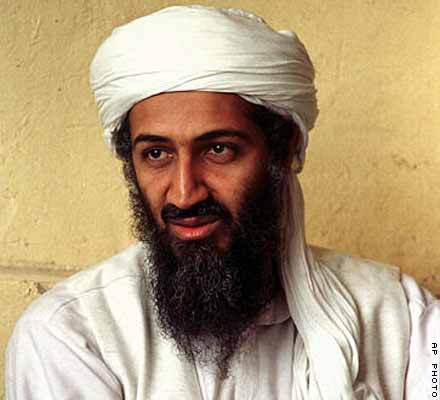
OBL: 1957-2011


"And then there's the notion that America has once again proved its greatness and preeminence by killing bin Laden. Americans are marching in the street celebrating with a sense of national pride. When is the last time that happened? It seems telling that hunting someone down and killing them is one of the few things that still produce these feelings of nationalistic unity....In sum, a murderous religious extremist was killed. The U.S. has erupted in a collective orgy of national pride and renewed faith in the efficacy and righteousness of military force. Other than that, the repercussions are likely to be far greater in terms of domestic politics -- it's going to be a huge boost to Obama's re-election prospects and will be exploited for that end -- than anything else." -- Glenn Greenwald

Wednesday, April 20, 2011

: )


Monday, April 11, 2011

Attention


It all turns around. A day that begins with the hardest wish against a workday reality turns in two hours to the shorelines of paradise. A night of subpar sleep, of wishes for a needed holiday, half because I squandered my weekend, half because I'm hassled by two longstanding, burrowing thoughts. I woke with the simple wish to be away, and now all is fine, upbeat, accepted. What's the difference? Attention. That's all. How often we hear the old adage, "wait and see -- things will turn out all right." Lives have been wasted and saved according to this advice, because the real substance that turns the tables isn't time itself but what our minds' eyes set upon.

We are made for movement, but first our eyes must be properly focused. The matter of good living is first a matter of right attention. Attention is coded in different ways: phenomenological experience, ideas, filtered through beliefs, values, goals. Now we're into the territory of cognitive therapy, which reformulates the thousands-year-old wisdom of Epictetus, a Greek slave with a crystalline mind: "people are disturbed not by things, but by the views they take of them." The vast majority of our waking lives we walk around talking to ourselves. Not externally, but internally -- psychotherapy jargon clips these words as automatic thoughts. The twist is that we often treat these self-stated words as if they're reality, and the vast majority of the constellation of souls haven't once disputed them with the rare exception of a friend who "changed my mind." A person remembers a difficult assignment and secretly says to himself, "impossible!" and so his feelings are anxiety, hopelessness, frustration. A twin in a parallel universe views the same situation and automatically thinks to himself, "unfortunate! But I'll manage," and feels a tinge of regret for having to sacrifice a planned free time activity. The responses that code our perception determine our emotional and psychological health. That's the tagline of the most empirically supported and widely used form of psychotherapy in history.

What was I thinking just hours previous, warm in bed, eyes stinging with poor sleep as the alarm rattled off? I was awfulizing necessity, dreary and damning the universe for existing as it does on Monday mornings. Work and rising from bed at an early hour had to come, but instead of an adaptation response of acceptance, I rebelled against gravity. Again, good living is a matter first of right attention, and in times when the outer world is immovable we always have the freedom to determine which attitude we will hold. Viktor Frankl called this freedom our "attitudinal value", and he learned it in the worst setting in world history: Auschwitz, naked and cold with the condemned bodies excoriated by a nation caught on a dream of superiority. He knew the secret: you always have the power to change your mind in any situation.

A person is as he does, and attention is a verb. We like to divide action from thought because we think that only the external, the measurable, the perceptible, is real. But the very core of human freedom begins with the direction of our consciousness; consciousness itself is willing-towards plus the senses. As we attend, so we live. There is no small accident in the New Testament's call to be transformed by the renewing of your mind (Romans 12:2). It's the mind that encodes and filters our experiences. The very words you secretly say to yourself determine the emotional output of whatever scene you find yourself in, from rage at an offhand comment to saintlike acceptance in the face of a crowd of contemptuous smiles.

What are you saying right now?

Monday, January 31, 2011

I've Rarely Agreed More

[Y]ou write in order to be read, it is the copulation of the act of writing. It’s the point of entry of your writerly subjectivity into the subjectivity of another, the infiltration by words. Words are the stuff of thought, invisible, intimate. I’ve always loved the idea that you could string a bunch of them together and make something that through imagery, word-sound, rhythm, and idea-content can invade another person’s mind, capture them.

Yes, you get the attention of the reader. But it’s more than that. In real, true, immersed reading, the words from the page are, in effect, replacing the words inside the reader’s head. And since words are the stuff of thought, almost the stuff of consciousness . . . Well, you can see that writing has a very powerful imperialist component. Conquest. On another front, reading is what gives you the essential material as a writer — not the experience of life, but choice.

And these are learned slowly, gradually, by osmosis, and there is very little significant writing that doesn’t depend on a deeply-schooled literary imagination. I am often shocked, I teach a lot of writers, would-be writers and they don’t read. They are not obsessed with the words of others. I don’t get it. If you’re not completely driven, get the hell away. To be completely driven is to be a reader, a deep reader.
-- Sven Birkerts, Pif Magazine interview

Wednesday, January 26, 2011

Another Reason Vladimir Rocks


Vladimir Nabokov may be known to most people as the author of classic novels like "Lolita" and "Pale Fire." But even as he was writing these books, Nabokov had a parallel existence as a self-taught expert on butterflies.
He was the curator of lepidoptera at the Museum of Comparative Zoology at Harvard University, and collected the insects across the United States. He published detailed descriptions of hundreds of species. And in a speculative moment in 1945, he came up with a sweeping hypothesis for the evolution of the butterflies he studied, a group known as the Polyommatus blues. He envisioned them coming to the New World from Asia over millions of years in a series of waves.
Few professional lepidopterists took these ideas seriously during Nabokov's lifetime. But in the years since his death in 1977, his scientific reputation has grown. And over the past 10 years, a team of scientists has been applying gene-sequencing technology to his hypothesis about how Polyommatus blues evolved. On Tuesday in the Proceedings of the Royal Society of London, they reported that Nabokov was absolutely right.

Monday, January 24, 2011

Proof: Editorial Incompetence


The following is an introduction to a clever (and depressing) experiment by an individual who really wanted to see how bad the tastes of editors have become:
In April [2001?] I submitted Vladimir Nabokov’s short story “Torpid Smoke” to seven online manuscript evaluation services. Other than changing the title to “Russian Smoke” and Nabokov’s name to Jonathan Shade, I left the piece unaltered. My online editors had some praise for the story, but also some suggestions on how to improve it. They each charged between three and fifteen dollars for their services.
The point should be underscored: we're speaking about a scintillatingly lyrical short story by Vladimir Nabokov, arguably the greatest stylist in the 20th century, and in my unabashed opinion one of the greatest of the stylistic bunch -- to be added to the list of Shakespeare, Proust, Joyce, and not much else --, being submitted to online editors with the floor left completely open for critiques. As any good fortune-telling cueball can tell you: the outlook does not look good. If Nabokov can be trashed by even one, much less seven, different services, that tells you how little the demand is for really verbally creative writing there is.

Of course, if questioned these editors will say they're looking to reflect what they think are the tastes of the unwashed masses. That would constitute quite the potent cry of the mechanics of the free market: true quality, especially in the realm of aesthetics, requires perceptive enough senses to catapult the genius in question to the statosphere of public attention. But perceptive minds are a rarity; ergo, the market praises mostly trash and everything that clutters around the center of mediocrity, and hardly ever anything "poetic" (gosh!), unless its author is a leftover from earlier times and has a really solid plot and refuses to drop his lyrical vein. Virginia Woolf had made the insightfully tragic comment that if Shakespeare had a sister, she would never be noticed -- because she would have been another unnoticeable 16th century female, and her culturally determined roles would have muffled out any chance for a nurtured, much less expressed, literary genius. Well, the story is turning back around again, this time in publishing form: if you have real talent and don't regurgitate the "explosions + sex + violence = sell" formula, and (heaven forbid!) you have a real solid inclination for stylistic expression, chances aren't looking good. Drop your authorial dreams and sit back in your secondary world with pedestrian windows.


Times really haven't changed in terms of the odds of catching a pearl within the muck of the publishing world in terms of literary creation. But there is one difference, alluded to above, which makes the editorializing process considerably different, and thereby decreases the odds of finding the pearl of genius just mentioned: editors and those in the literary judgment realms are beginning to lose their aesthetic autonomy, and are choosing instead to try and reflect (or worse, naturally reflect) the tastes of the genred population they have in mind when thinking of sales. The profit motive has again corrupted something of importance in our society. Now it's all about what they think the average book buyer -- that vague abstraction which allows no particularities -- is going to dig.

Which is why I'd rather be spending my reading time in the company the dead.

Friday, January 21, 2011

On Work Anxiety

For the few weeks preceding this one I found myself wandering around with the hazed feel of a half-aware dream. This was the time when I was still planting my feet into my first white-collar job, an internship (yes, slavery, but still loved), and the second leap into the grind of a forty hour workweek, my first being a two month stretch working construction, with all the exhaustion, sweat, and sexaholic men who archetypically come with manual labor deal. I’ve noticed a difference between these types of work which goes beyond the work itself – the very social environments are qualitatively different, the very people who make up the fields capable of being reduced to distinctively alternate modes of being.

Take construction. The grown-up boys who made up most of the workforce were essentially men of flesh. They lived with immediacy in mind, and all the wishes for beer, sex, and compliant women were pushed to the very jokes and relative good humor they brought to the job. The recurring complaints were with the routine work itself. These were men who were seduced by the high pay and had become to a large degree trapped in this field because almost any other alternative job for their level of education and experience would have meant minimum wage or something approximate. The most tragic expression of this tendency was made in the words of a coworker on my brother’s crew. After a somewhat hopeful high school graduation based in dreams of getting good cash at construction, the few years of repetitive work exposed to the elements had begun to accrue, until eventually he would come to work entrenched in a morose mood, which would find a cryptic release through telling my brother that he would like to rob a bank because the job he was on now – which stood for the limit of work possibilities in his life – was inconceivable as a lifelong career and something he already hated with a cold, hopeless indifference. That was the cognitive refrain embedded in most of the minds there, which never found the roaring release of despair articulated by this young mind, whether for reasons of family support, religion, or the numbness that comes with accepting one’s burden over the years.

But these guys could be damn fun to be around. Dostoevsky, in his too little known Memoirs from the House of the Dead (not zombies, folks), recorded in psychological detail some unforgettable sights and scenes from his four year prison stay in Siberia (which he would later describe to his brother as similar to “being shut up in a coffin”), including the searing insight that the inmates there were by and large indistinguishable from children in their very personalities – in the way they sometimes quarreled over things, in their sense of appreciation when given attention, “like children, delighted over the smallest success, vain over it indeed.” Likewise with the field of construction. The jokes were juvenile, and many of the oldest members discussed with a sort of adolescent excitement the grand days of sexual adventure and partying till dawn. Humor and gentle jabs were ubiquitous. They lived for beer and all the clichéd masculine qualities you can imagine. And most importantly, aside from the perennial stress of drumming out the same work day after day and the expected (and therefore less harmful) layoff, they were psychologically free. Camaraderie is the adjective of choice.

The white-collar world, despite all its claims to the contrary, might not be that much better than its sweat-drenched counterpart. Despite the glories of a desk and office to oneself and salvation from the naked sun, here the workplace can become packed with a silent anxiety that isn’t quite articulated in the moment of social exchanges. Smiles are more often forced, emotions are more often manufactured. Kind words and good intentions may be present in the social greetings, but there’s a barely perceivable reservation behind most (if not all) exchanges, a slight distance in the exchange, just enough to be contagious, and have your mind clapped back in perpetual doubt even if you’re not sensitive enough to capture the hint with conscious eyes. The weekends may not be as craved as a life with those who live a life of manual labor, but I found that an inconspicuous retreat to my office often is. Perhaps part of the reason has to do with being more intimately juxtaposed with one’s higher-ups, and so having a higher consciousness of one’s performance, but there is a large degree of the same thing present in the blue-collar work environments.

But perhaps the answer seems more in the direction of being caught up more in our culture’s definition of comprehensive “maturity”. A large part of this means being conscious of one’s status and prestige, the importance of keeping oneself in a linearly growing career path, and from a broader perspective thriving in this environment often means having a higher sense of individualism. Yeah, the Reaganesque, up-by-our-own bootstraps individualism that means eschewing dependence and charging toward the goals that would better us and the families we might have. According to this view, others aren’t relatable because they’re too caught up in self and the web of self-related goals, primarily family, and we find a greater challenge working with a seamless exchange of words in relational moments because we’re led to believe that others are instrumental or ornamental parts to our driving goal of pursuing the American dream, or we’re consciously or unconsciously afraid of being the brunt of the neglect that results from this mentality and so draw back to a safety zone of stretched smiles.

It’s just a thought, and there are certainly other variables at play – such as our greater tendency for materialism (which correlates with the status drive), or the simple distractions that come with living a life of higher responsibility (family, deadlines, bosses, you got it). But there’s clearly something about the blue-collar mentality of being in a constant state of job anxiety regarding where you’ll work, which when added to the clear sense that your place in the hierarchy is down in the dregs rather than floating in the limbo of middle importance gives one a sense of ease in reaching out to others. When all is secure in the sphere of one’s career and the only way to look is up, then people who are capable of being given secondary glances are more likely to be handed them.

Then there’s the psychologically tricky part. Our light disdain for the existence of others – of not caring intrinsically for them as persons rather than parts of one’s work environment – translates to a fear of judgment by those who do the disdaining, and this fear of judgment adds that much more inertia to our reluctance to take the chance to heroically reach out to another human being and catch them where they are for who they are. Whether we start our grand high-class careers with good intentions and get caught in the social distance imputed by others until we eventually catch the disease ourselves, or start fresh from college with a careless attitude, we’re going to end up being tempted with the essential problem at some time. And this problem perpetuates itself. The harrowing sense of distance brought about through the dispositions of others (whether meekly through fear of judgment or aggressively through indifference) adds to the conviction that others really are worth keeping a distance from -- and being feared. We need the courage to love others and be authentic, which in terms of our duties from a Christian perspective are two aspects are entailed within one another. Only with the daringness to love others and meet them for who they are does authenticity come to grow within us, or conversely, only when we cease to care about ourselves (whether through fear of judgment or interest in our goals to the indifference of others) are we allowed to respond flowingly with the person across our conversational table.

Leave it to C.S. Lewis to offer the brilliantly practical advice that Christians should seek to integrate themselves in secular places in society rather than live in their own Lord-bring-the-rapture worlds. For from a spiritual perspective, we shouldn’t imagine the social distance problem without its own cause. Underneath all there is a lack of knowledge, or lack of seriousness in attending to, the message of Christ in this so-called Christian nation. I simply can't imagine times being harder in social terms than in the present. We have no shared national difficulties, and our sense of individuality has grown to such a degree to where the social unity that would otherwise organically grow when individuals find themselves in the same room is gone. This is the age of advanced capitalism, with the concise and impersonal treating of others for the business bottom line, the pervasive interest in getting what we want, and all the cold gaps in our social relations (from the reflective pause in one's look, to the inauthentic smile) have resulted.

We simply have lost the art of relating. Instead of each one of us bursting outward toward others in the exuberance that defines the benevolence that a life seriously dedicated to Christ inspires, we've become tragically tagged with the tendency of looking inward for concern of what the other might say or do to us, or looking outward and beyond others, treating them with the emaciated concern that allows our consciences to remain in a jagged territory comparable in smaller size to the guilt of a murderer. We are scared. Tensely, nervously scared. But there is always the courageous solution of learning to love behind our tight circles of accepted others.